
Not ten, ELEVEN!
Published about 11 hours ago
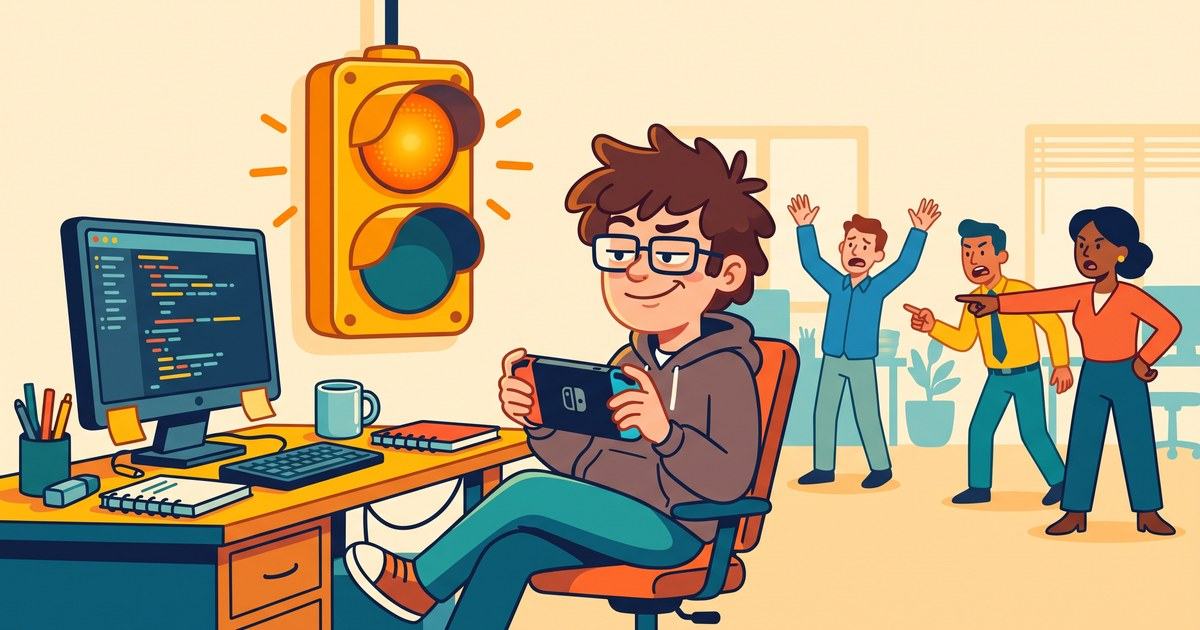
At the start of my career I was a cocky little guy. I thought I knew a lot. Turns out I had a lot to learn, and I learned most of it from the people around me. This is one of those lessons.
The traffic light
I was working at a company with a huge backend monolith. They deployed once or twice a day, and the rules were simple:
- If the build was green, anyone could deploy.
- If the build was amber or red, nobody could. Something was broken: failing tests, a failed build, anything like that.
Nobody told me this. I just didn't know.
The change that was "minor"
I shipped a small change. If I remember right it was a template tweak in the JSPs (Java Server Pages, old school technology, lol). Nothing scary.
The build went amber. I didn't notice, and even if I had, I wouldn't have understood what it meant.
Two hours went by. I went to lunch, and I was playing Mario Kart on my break when the head of systems came over and said: "Alex, you broke the build."
I said ok. And I kept playing.
Let me say that again. The head of systems walked over to me, and I finished my race. I didn't stand up, and I didn't go unblock everyone. I had no idea how important it was.
After lunch I fixed it. Then the head of the backend came to my desk to tell me off: "Hey man, the build was amber for two hours, eh?"
To be fair, nobody had anything urgent to ship that day. But if they had, I would have been the blocker. With 2-3 releases a day, and some of them urgent, that is a real problem.
Eleven
Later I asked my manager, smiling, because in my head this was not a big deal: "How important was that, from 1 to 10?"
He answered immediately, and angrily: "TEN."
Then he thought about it for a second, turned back and said: "Actually, ELEVEN."
That is the title of this post. It is also the thing that stayed with me.
Why it stuck
What stayed with me is not the telling off. It's how little I understood at the time.
For me, the build was just a color on a screen. Mario Kart was on, and my change was tiny. Two heads of department had to come to my desk, and one of them found me in the middle of a race. I was smiling when I asked my manager how important it was. I really thought it wasn't that big of a deal.
He did not think so, and he was right.
You can't know until you stand in their shoes
You can never know how important something is to someone else until you see their day from where they sit. What is "minor" for you may be the only thing blocking five other people.
A few things I try to do now:
- When someone tells me I'm blocking them, I stop what I'm doing. I ask the questions later.
- Before I ship, I check what state the thing is in. If it's red, I look at it right away.
- When I need something from someone, I say how important it is and why, instead of assuming they already know. "It's blocking the team's release" lands better than a bare link.
- If I don't understand why something is urgent, I ask "how important is it from 1 to 10?" And I listen to the answer.
The answer may be ten. It may be eleven.
Related articles
Never just restart it
Turning it off and on again isn't always the answer. A restart hides the bug and it comes back. Dig once, win every day after.
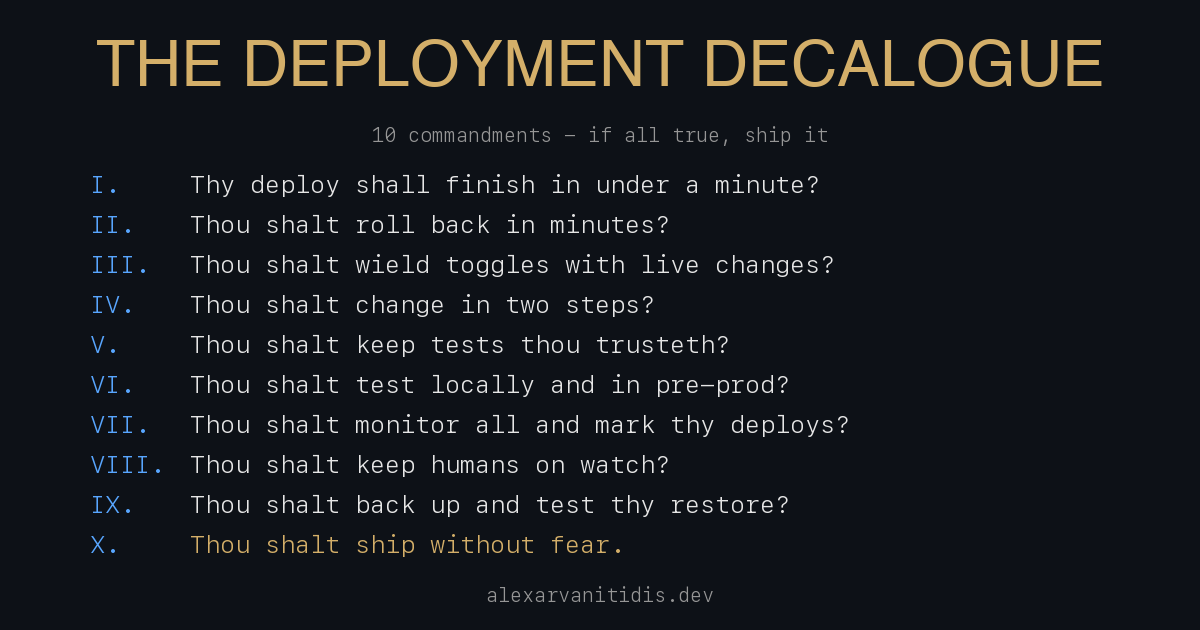
The deployment decalogue
Ten commandments. If they are all true, ship it. The fear is cultural, not technical.
1 year of LLMs writing code for me
I have been an early adopter of AI coding tools since they became genuinely useful. Here is what that actually looks like day to day, and why experience matters more than ever.